

Buying vacant land looks simple compared to buying an established property — there's no building to inspect, no tenant to deal with, no strata to check. But that apparent simplicity hides a different set of risks that catch out plenty of investors, from zoning restrictions to hidden servicing costs that can blow out a project's budget before a single brick is laid.
Because vacant land is often bought with a specific development or resale plan in mind, the due diligence needs to go well beyond a title search. It needs to confirm that what you intend to do with the land is actually achievable, at a cost that still makes the numbers work.
Zoning And Planning Controls
The single most important check on any vacant block is confirming what can actually be built there under the current zoning and planning scheme. Zoning determines permissible land use, while overlays can add further restrictions around bushfire risk, flooding, heritage, vegetation, or building height that aren't obvious from a basic title search.
It's worth getting a planning certificate or equivalent document from the relevant council or state planning authority, and, for anything beyond a straightforward single dwelling, having a town planner review the site against your intended use before signing.
Access, Easements And Title Issues
- Registered easements that may restrict building placement or require access for services
- Legal and physical access to a formed road
- Any covenants restricting design, materials, or land use
- Encroachments from neighbouring structures or fences
- Native title or heritage listings that could affect development rights
- Any caveats or unusual notations on the title
Services And Site Costs
Vacant land, especially on the fringe of growth areas, doesn't always come with services already connected. Confirming the availability and cost of connecting water, sewer, power, gas, and telecommunications is essential, since these costs can vary enormously between blocks that look similar on the surface.
Site conditions matter just as much. Soil type, slope, drainage, and the presence of rock or contamination can significantly affect construction costs, and these factors are rarely visible from photos or a quick drive-by inspection.
- Confirmed connection points and costs for water, sewer, power, and gas
- Soil classification and any geotechnical reports available
- Slope and drainage patterns across the block
- Any history of flooding, contamination, or prior industrial use
- Cost of any required retaining, fill, or earthworks
Development Feasibility Checks
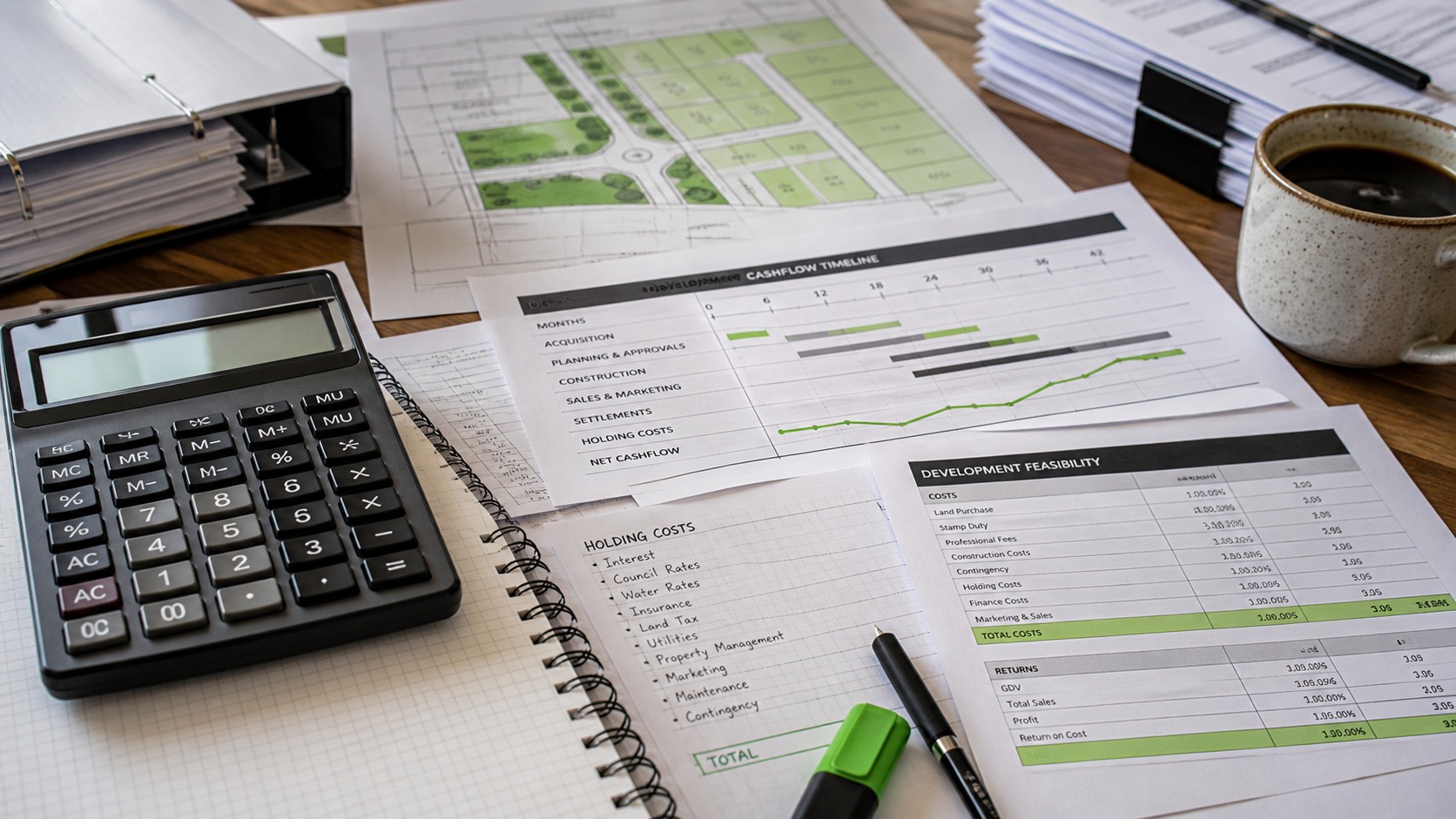
Before committing, it's worth running a basic feasibility on the intended use of the land, factoring in realistic construction costs, council fees, headworks or infrastructure contributions, and holding costs during any approval and construction period.
This is also the stage to confirm timeframes with council — some areas process development applications quickly, while others can take many months longer than expected, which affects both holding costs and the overall viability of a project.
Contract-Specific Checks
The contract of sale itself deserves close attention on vacant land purchases. Special conditions relating to subdivision, plan registration, or finance approval timeframes are common and need to be understood clearly before signing, since delays outside your control can sometimes trigger penalties or forfeiture if the contract isn't drafted carefully.
Where land is being purchased off a plan of subdivision that hasn't yet been registered, it's particularly important to understand what happens if registration is delayed or the final lot boundaries change from what was originally marketed.
Final Word
Vacant land can be a straightforward and profitable investment, but only when the due diligence goes beyond the title search and into zoning, servicing, site conditions, and contract terms. The absence of a building doesn't mean the absence of risk — in some cases, it simply relocates the risk to areas that are easy to overlook.
Engage a solicitor, town planner, and where relevant a builder or quantity surveyor early in the process, and treat the cost of proper due diligence as a small price against the much larger cost of getting a vacant land purchase wrong.
Watch The Free Training
Watch the free Think Property Club training and learn how everyday Australians are using the wholesale property system to find, assess and structure high-profit property opportunities.
Watch the free masterclass →