

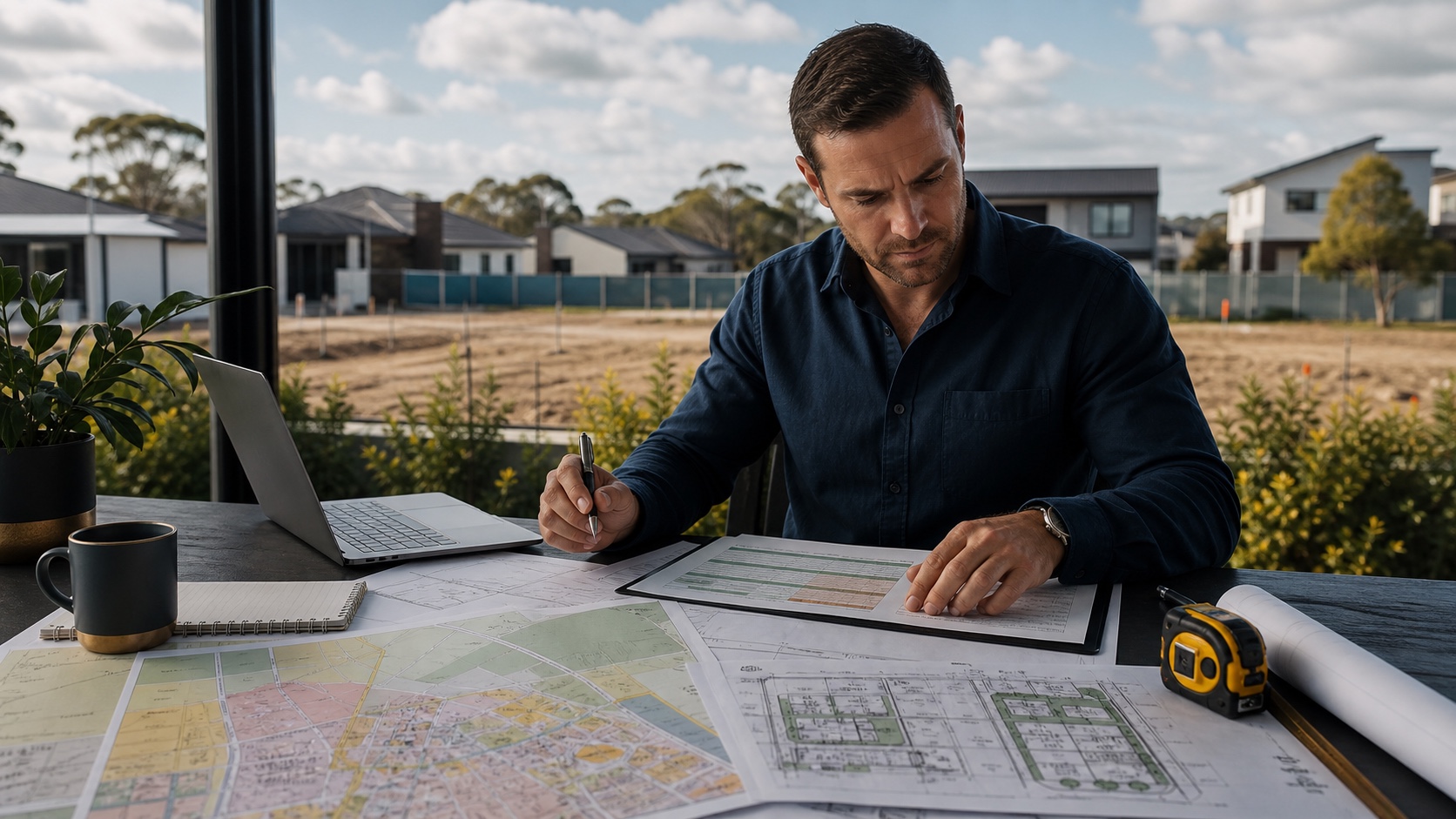
Property development due diligence is the difference between buying an opportunity and buying a problem.
On the surface, a site can look perfect. It may have a big block, a tired house, a good suburb, and enough room on paper for a subdivision, duplex or small development. But until the planning controls, services, costs, risks and numbers have been checked properly, it is still only a guess.
This is where many new investors get caught.
They fall in love with the idea of the deal before they understand the deal.
At Think Property Club, we teach students to slow down at the right moments. Not because we want them to be scared of property, but because the best investors know how to test an opportunity before they commit.
What Is Property Development Due Diligence?
Property development due diligence is the process of checking whether a site can realistically deliver the outcome you are hoping for.
It is not just a quick look at the land size or a guess based on what the neighbour did. Proper due diligence checks the legal, planning, physical, financial and market factors that can affect a property deal.
The goal is simple:
- Can the site do what you think it can do?
- What will it cost?
- What approvals are needed?
- What risks could stop or reduce the profit?
- Who needs to confirm the assumptions?
- Is the deal still worth doing after the real numbers are known?
Without due diligence, a property deal can look profitable right up until the moment it becomes expensive.
Why Due Diligence Matters Before You Buy
Most property mistakes do not happen because someone failed to find a site.
They happen because someone failed to test the site properly.
A block may look wide enough for a subdivision, but an easement may run through the land. A zoning code may allow a certain use, but an overlay may trigger extra assessment. A house may look easy to demolish, but character or heritage controls may change the approval pathway. A feasibility may look strong, but construction, holding costs, GST, finance and contingency may remove the margin.
This is why property development education is not only about finding deals. It is about learning how to protect yourself before you go too far.
Due diligence helps you avoid:
- Overpaying for a site
- Assuming approvals will be simple
- Missing flood, character, heritage or environmental overlays
- Underestimating build and civil costs
- Forgetting holding costs and finance costs
- Relying on resale values that are too optimistic
- Presenting weak deals to joint venture partners
- Turning a good idea into a bad project
Start With The Strategy
Before checking the details, you need to know what strategy you are testing.
A site that works for one strategy may fail for another.
For example:
- A splitter block may need separate lots, services and frontage
- A subdivision may depend on minimum lot size and council requirements
- A duplex may depend on zoning, setbacks, slope, access and local demand
- A small townhouse project may depend on density, parking and infrastructure
- A renovation deal may depend on build cost, resale demand and time
The due diligence process should match the intended outcome.
The question is not just, "Is this a good property?"
The better question is, "Is this the right site for this specific strategy?"
Council, Zoning And Planning Checks
Council planning controls are usually one of the first major checks.
Every council area has its own planning rules, mapping systems and development pathways. In Brisbane, for example, investors often need to check Brisbane City Council City Plan mapping, zoning, neighbourhood plans and overlays. In other locations, the relevant council planning scheme will guide what can and cannot be done.
Key planning checks may include:
- Zoning
- Minimum lot size
- Frontage requirements
- Height limits
- Setbacks
- Site cover
- Parking requirements
- Character or heritage controls
- Flood or overland flow overlays
- Bushfire, landslip or environmental overlays
- Neighbourhood plan requirements
- Whether the proposal is accepted, code assessable or impact assessable
Planning rules can completely change a deal.
Two properties on the same street may have very different constraints. This is why you should check the actual site, not rely on suburb-level assumptions.
Check The Title, Lots And Legal Constraints
The title and cadastral details matter because they show what you are actually buying.
A listing may describe a property as "two lots" or "subdivision potential", but that does not automatically mean the title, services or planning pathway are simple.
Important checks may include:
- Lot and plan details
- Whether the site is one title or multiple titles
- Easements
- Covenants
- Encumbrances
- Existing access arrangements
- Boundaries and survey issues
- Whether services are separate or shared
This is where professional advice matters.
A town planner, surveyor, solicitor and civil engineer can all help confirm different parts of the picture. The earlier you identify a constraint, the easier it is to price it into the deal or walk away.
Physical Site Checks
Some of the most expensive problems are visible only when you understand what to look for.
The physical condition of the land can affect design, approval, construction and profit.
Physical due diligence may include:
- Slope
- Retaining walls
- Stormwater flow
- Driveway access
- Trees
- Existing structures
- Soil conditions
- Flood levels
- Services location
- Neighbouring properties
- Demolition complexity
- Site access for builders and machinery
A flat rectangular block is usually easier to work with than a steep, irregular site with difficult access. That does not mean difficult sites are always bad. It means the costs and risks need to be understood before you buy.
Feasibility: The Numbers Must Carry The Deal
A property development feasibility is where the idea meets the numbers.
It should include more than the purchase price and expected sale price. A proper feasibility looks at the full cost of creating the outcome.
Common feasibility items include:
- Purchase price
- Stamp duty and acquisition costs
- Legal fees
- Consultant fees
- Town planning fees
- Surveying
- Engineering
- Council fees and contributions
- Demolition
- Civil works
- Construction
- Contingency
- Holding costs
- Finance costs
- Selling costs
- GST and tax considerations
- Expected end value or sale price
- Profit margin
If the profit only works when every number is perfect, the deal may be too thin.
Good investors build in room for reality.
Market Due Diligence
Planning approval is only one part of the deal. The market still needs to want the finished product.
Market due diligence may include:
- Comparable sales
- Buyer demand
- Rental demand
- Local demographics
- Competing stock
- Days on market
- Product type
- Pricing depth
- End buyer expectations
For example, a duplex may be technically possible, but if local buyers strongly prefer detached homes, the resale assumptions may need to be conservative. A townhouse project may look strong on paper, but if there is already too much similar stock nearby, absorption risk may increase.
The best feasibility studies connect planning reality with market reality.
Specialists You May Need Around The Deal
Property development is not a solo guessing game.
Depending on the deal, you may need:
- Town planner
- Surveyor
- Civil engineer
- Architect or building designer
- Builder
- Solicitor
- Accountant
- Finance broker
- Real estate agent
- Quantity surveyor
- Project manager
The right specialists help you test assumptions before they become expensive mistakes.
At Think Property Club, this sits inside our 4S Framework: System, Strategies, Specialists and Support. You need a process, but you also need the right people around the process.
Common Due Diligence Mistakes
New investors often make the same mistakes:
- They believe the agent's development comments without checking
- They rely on land size alone
- They ignore overlays
- They use rough build costs
- They forget GST, tax and finance
- They assume council approval will be quick
- They do not allow enough contingency
- They skip legal review
- They present deals to investors before the numbers are tested
The solution is not to become paranoid.
The solution is to become methodical.
A Simple Due Diligence Order
A practical early-stage process may look like this:
- Identify the intended strategy
- Check zoning and planning controls
- Check overlays and constraints
- Confirm lot, title and easement information
- Review services and access
- Check site condition and physical risks
- Run a conservative feasibility
- Review comparable sales and demand
- Speak with relevant specialists
- Decide whether to proceed, renegotiate or walk away
You do not need every answer on day one.
But you do need to know what questions matter.
Frequently Asked Questions
What is due diligence in property development?
Due diligence is the process of checking the planning, legal, physical, financial and market risks of a property before buying or committing to a development strategy.
Why is council zoning important?
Zoning helps determine what may be allowed on a site, but it is only one part of the planning picture. Overlays, neighbourhood plans, lot size, access, services and assessment pathways can also affect the outcome.
Can a real estate listing be trusted if it says "development potential"?
Treat it as a clue, not proof. Always verify development potential through council planning checks, title searches, specialist advice and feasibility.
Who should help with development due diligence?
Depending on the project, you may need a town planner, surveyor, solicitor, engineer, builder, accountant, broker and agent. The right team depends on the strategy and risk.
Final Thoughts
Property development due diligence is not about killing deals.
It is about finding the real deals.
When you know how to check a site properly, you can move with more confidence, avoid obvious traps, and present stronger opportunities to partners, investors and specialists.
The best property investors are not the ones who guess fastest.
They are the ones who know how to test the opportunity before everyone else sees the value.
Watch The Free Training
Watch the free Think Property Club training and learn how everyday Australians are using the wholesale property system to find, assess and structure high-profit property opportunities.
Watch the free masterclass →