

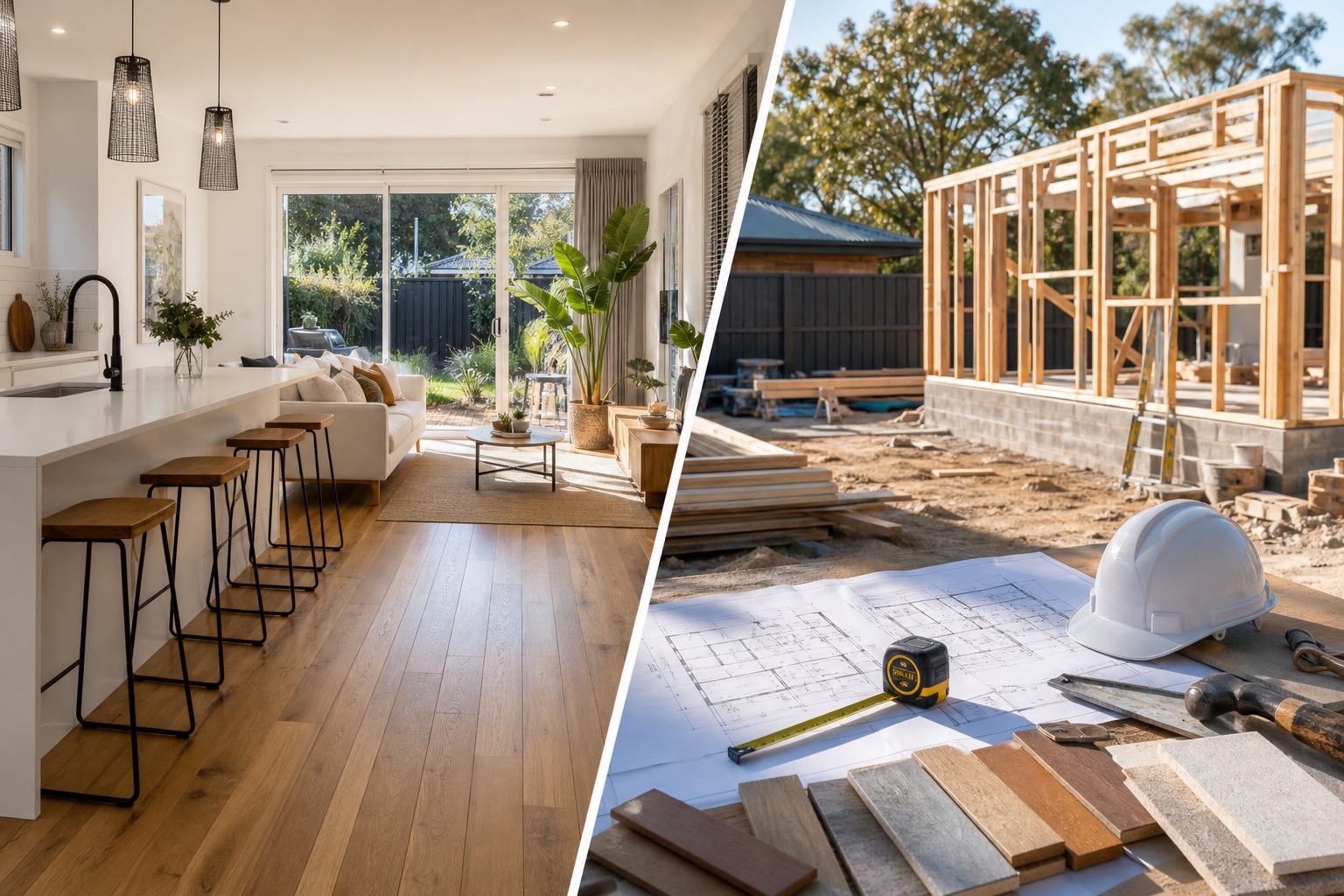
Renovation and development can both create value in property, but they are not the same game. One focuses on improving an existing property. The other often depends on planning, approvals, construction, finance and a bigger project pathway.
Many beginners confuse the two because both can involve buying a property and making it worth more. The difference is in the risk, timing, skill set and type of value being created.
This guide explains how investors can think about renovation versus development before choosing a strategy.
What Renovation Value Looks Like
A renovation strategy improves the existing dwelling. The investor may update the kitchen, bathrooms, flooring, paint, landscaping or layout. The goal is usually to lift appeal, rent, resale value or both.
Renovation can be powerful when the property is tired but structurally sound, the suburb supports the finished value, and the works can be controlled tightly.
At Think Property Club, the focus is always on the deal, not just the property. A beautiful renovation can still be a poor investment if the numbers do not work.
What Development Value Looks Like
Development value usually comes from changing the use, density or product. That might mean subdivision, duplex, townhouses, units, or creating a new dwelling outcome.
Development can unlock larger upside, but it also brings more moving parts. Planning rules, zoning, overlays, services, build costs, finance, council timing and market demand all matter.
Capital And Finance Differences
Renovations are often smaller in scale, although they can still become expensive. Development usually requires more capital, stronger finance planning and more tolerance for delays.
Investors need to understand:
- Deposit and settlement funds
- Renovation or construction budget
- Holding costs
- Contingency
- Interest and finance fees
- Professional consultant costs
- Selling or refinancing costs
The bigger the project, the more dangerous vague numbers become.
Timing And Approval Risk
Renovation timing is usually more controllable when approvals are not complex. Development timing can depend heavily on council, consultants, service providers and construction availability.
A project that looks profitable over six months may become weaker if it stretches to twelve or eighteen months. Holding costs and market changes can eat into the margin.
Skill Set Required
Renovation rewards project control, product selection, trades management and buyer understanding.
Development rewards feasibility, planning knowledge, consultant coordination, finance structure, risk management and exit strategy.
Both require discipline. Neither should be treated as easy money.
How To Compare A Deal
Before choosing a strategy, ask:
- What is the simplest value-add path?
- What evidence supports the resale or end value?
- What approvals are required?
- What could delay the project?
- How much capital is at risk?
- What is the conservative profit margin?
- What happens if the market softens?
The right strategy is not the most exciting one. It is the one that fits the site, the numbers and the investor's capability.
Example: Same Property, Different Strategy
An older home on a large block might suit a cosmetic renovation, a rooming-house strategy, a subdivision, a duplex or a townhouse project. Each pathway creates a different deal.
The beginner may ask, "What can I do with this property?"
The better question is, "Which strategy creates the best risk-adjusted result?"
That shift changes the conversation.
Common Mistakes
- Choosing development because it sounds bigger
- Choosing renovation because it feels simpler without checking margin
- Ignoring council rules
- Underestimating build costs
- Forgetting holding costs
- Copying another investor's strategy without checking the site
Final Word
Renovation and development are both tools. The skill is knowing when each one fits.
Think Property Club helps investors learn how to compare strategies, check feasibility and make property decisions with a clearer process.
Watch The Free Training
Watch the free Think Property Club training and learn how everyday Australians are using the wholesale property system to find, assess and structure high-profit property opportunities.
Watch the free masterclass →