

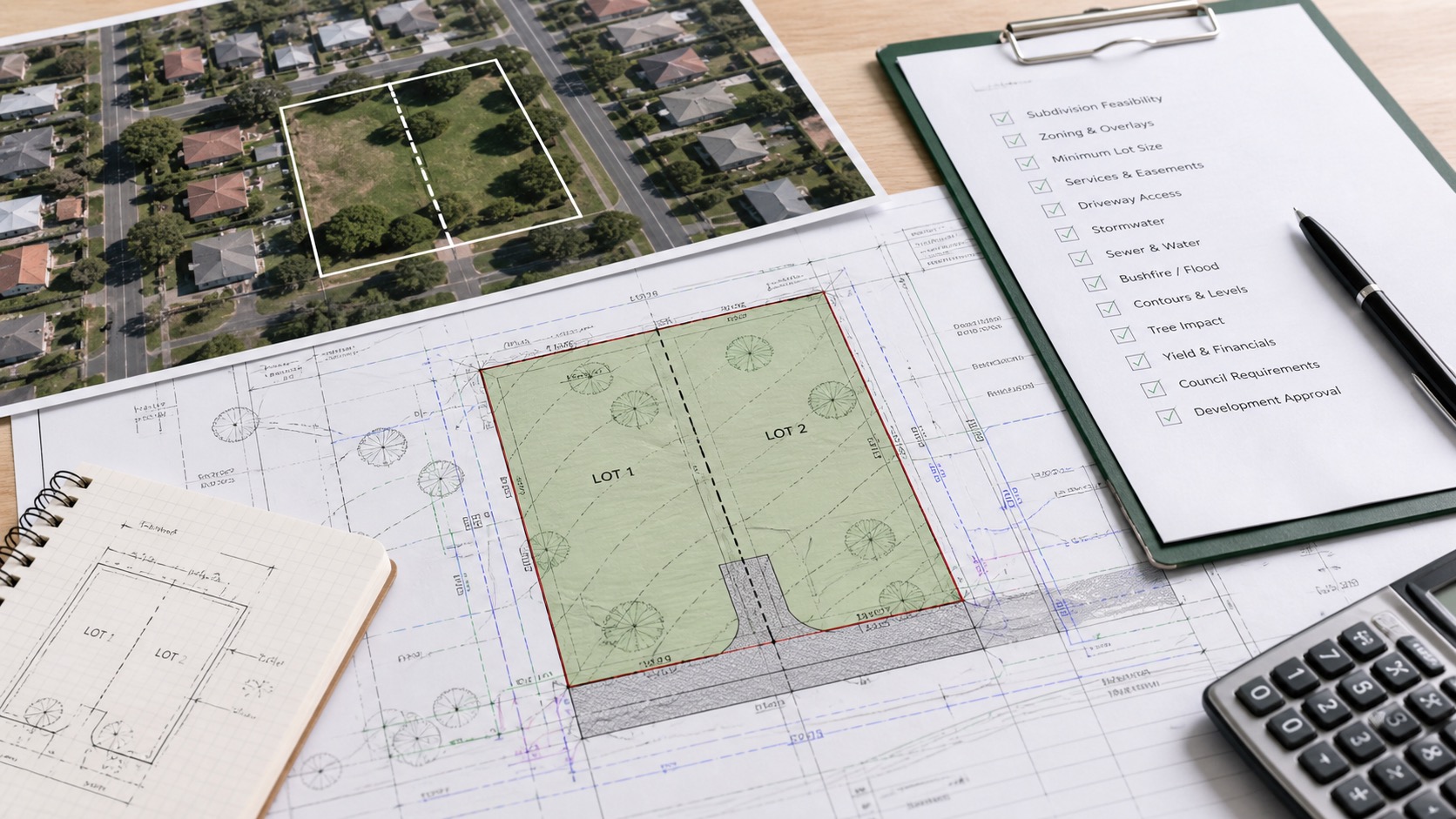
Ask any experienced developer where a project budget is most likely to blow out, and most will point to the same place: underground, before the first wall goes up. Site costs cover everything needed to get a block ready for construction, and they're notoriously hard to pin down with certainty until the digging actually starts.
For investors backing a development, understanding why site costs blow out — and how to budget for that risk — is one of the more valuable feasibility skills to develop. A project can look profitable on paper and still get squeezed hard once the ground tells a different story than the reports suggested.
What Site Costs Actually Cover
Site costs sit outside the standard construction contract and cover the work needed to prepare a block for building. They're often estimated as an allowance early in feasibility, before geotechnical and detailed engineering reports are available.
Because these costs are based on assumptions rather than confirmed data, they're the single biggest variable in most development budgets — far more volatile than the fixed-price building contract that follows.
Common Items Included In Site Costs
Site costs typically bundle together a range of works that vary enormously depending on the block.
- Excavation and cut-and-fill to level the site
- Retaining walls where there's a slope or level change
- Stormwater and sewer connections, including any need to relocate services
- Rock removal, which can be priced per cubic metre once encountered
- Contaminated soil testing and removal if the site has a prior industrial or fill history
- Piering or specialised foundations if soil conditions require it
- Bushfire attack level (BAL) or flood mitigation works where applicable
Why The Numbers Move So Much Once Work Starts
Most site cost blowouts trace back to one root cause: the true condition of the ground wasn't known until excavation began. A preliminary geotechnical report samples a handful of points across a site, and it can miss pockets of rock, unstable fill, or contamination between test holes.
Sloping blocks, sites with a history of fill or demolition, and anything near a former industrial use or old service station carry meaningfully higher risk. Even a well-prepared budget can be blown apart by rock that wasn't picked up in the original bores.
How Experienced Investors Manage The Risk
The goal isn't to eliminate uncertainty, because that's not realistic with underground works. The goal is to make sure the budget has enough room to absorb it without threatening the viability of the whole project.
- Commission a full geotechnical report before settlement, not after, where the contract allows
- Build a specific contingency for site costs separate from the general construction contingency
- Get a site-specific quote from the civil contractor rather than relying on a generic per-square-metre allowance
- Ask about the site's history — prior use, fill records, and any known contamination
- Walk the block after rain to check for drainage issues that reports sometimes miss
What To Do When Costs Do Blow Out
Even careful investors occasionally hit an unexpected cost once excavation is underway. The key is having a documented process with the civil contractor for variations, so unexpected costs are quoted and approved before work continues rather than discovered on an invoice.
Keeping a clear paper trail of what was found, what it cost to fix, and how it compares to the original allowance also matters if the site is later sold or the numbers need to be explained to a financier or partner.
Final Word
Site costs are where development budgets are won or lost, precisely because they're the hardest part of the project to see before work begins. A generous, well-researched allowance here does more for a project's survival than almost any other line item.
Investors who treat site cost estimates with healthy scepticism — and pair that with proper geotechnical advice — give their developments a much better chance of finishing on budget.
Watch The Free Training
Watch the free Think Property Club training and learn how everyday Australians are using the wholesale property system to find, assess and structure high-profit property opportunities.
Watch the free masterclass →